Campaign Medal Groups

A rare Gulf War Medal clasp 16 Jan to 28 Feb 1991, Campaign Service Medal E2 clasp Kuwait, Lance Corporal Women’s Royal Army Corps (Royal Corps of Transport).


Gulf War Medal clasp 16 Jan to 28 Feb 1991


W0807850 L Cpl J Cotton WRAC


Campaign Service Medal E2 clasp Kuwait


W0807850 L Cpl J Cotton RCT


Mounted as originally worn.


Around 200 women of the Women’s Royal Army Corps (WRAC) served during the Gulf War (Medals with and without clasps) this was the last time women in the Army were deployed on a large scale as a separate Corps. The WRAC were disbanded in 1992 and its personnel were either permanently placed with the Regiments and Corps they had been attached to, in this particular instance the Royal Corps of Transport, or were transferred to the newly formed Adjutant General’s Corps which was formed on 6th April 1992.


A rare pair to the WARC and first time on the market.


NEF £1,450 Available includes postage & insurance UK and overseas address.

General Service Medal E2 clasp Cyprus, Campaign Service Medal E2 clasps Radfan, Borneo, Trooper 4th Battalion Royal Tank Regiment late 1st Battalion Lancashire Fusiliers.


General Service Medal E2 clasp Cyprus


23472921 Fus J J Leathwood LF


Campaign Service Medal E2 clasps Radfan, Borneo


23472921 TPR J J Leathwood 4 RTR


Clasps on the Campaign Service Medal riveted together, medals mounted as originally worn.


John J Leathwood was born in Liverpool in 1938 and was almost certainly a National Serviceman before signing on for Regular Army service. The 1st Battalion Lancashire Fusiliers served in Cyprus from February 1957 to January 1960. Transferring to the Royal Tank Regiment probably on completion of his National Service, he served with the 4th Battalion (4-RTR) in Radfan, ‘B’ Squadron only serving in Radfan from early February to end May 1964 with Ferret Scout Cars and Saladin Armoured Cars. 4 RTR served as the Far East Recce Regiment relieving the Queen’s Royal Irish Hussars in September 1964, ‘A’, ‘B’ and ‘C’ Squadrons rotating after a six month tour of duty in Scout Cars and River Boats until the end of the confrontation in 1966.


GVF £325 Available includes postage UK address

1939/45 Defence and War Medals, Efficiency Medal ‘Territorial’ GVI 1st type, Sergeant, Auxiliary Territorial Service


1939/45 Defence and War Medals 


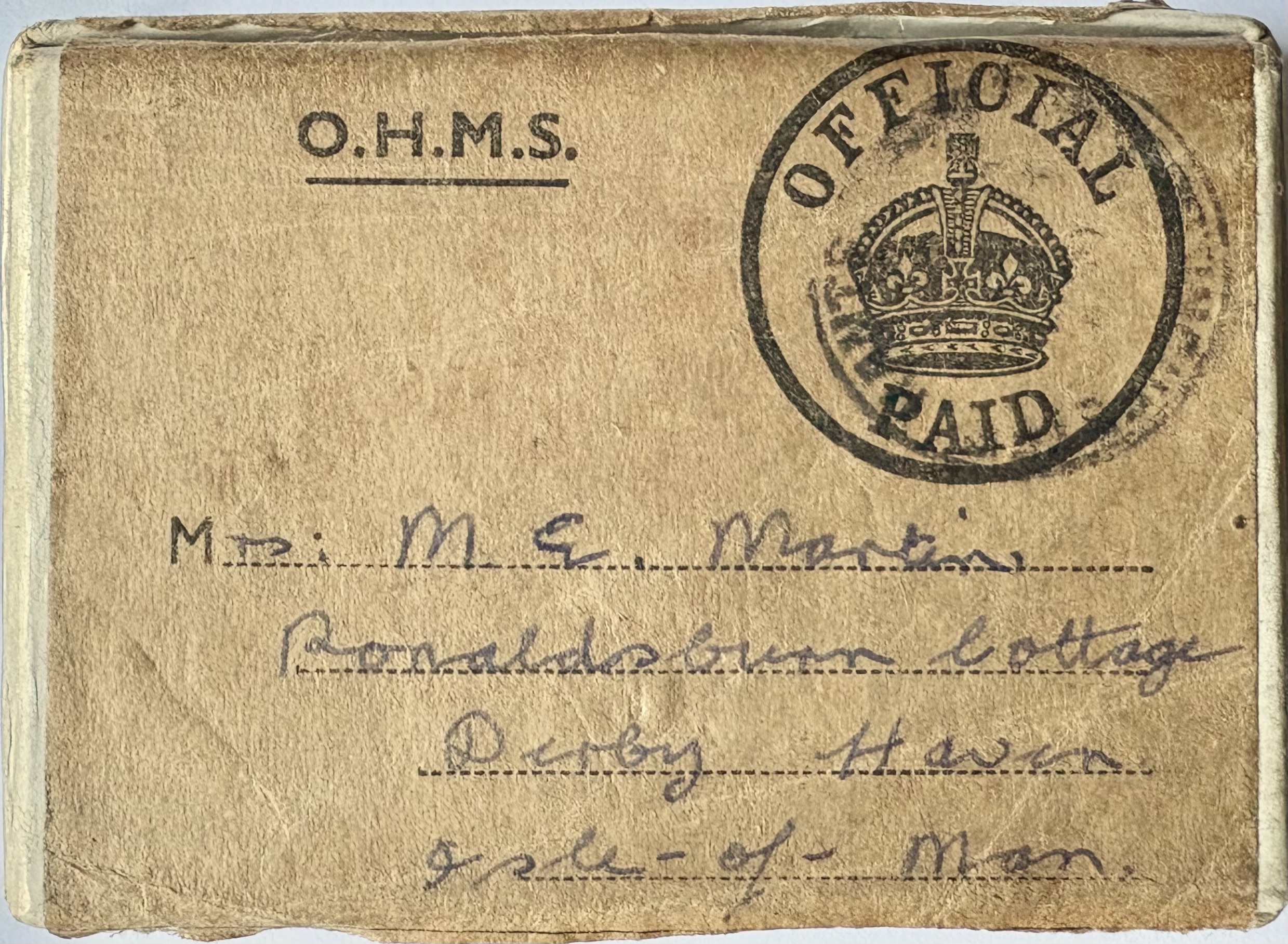
Unnamed as issued in card transmission box with Medal award certificate addressed


Mrs (sic) M E Martin, Ronaldsburn Cottage, Derby Haven, Isle of Man


Efficiency Medal ‘Territorial’ GVI 1st type


W.1016 SJT M E Martin ATS


Miss M E Martin was awarded the Efficiency Medal ‘Territorial’ in Army Order 93 dated 13th October 1948 TNA WO102/37 refers.


With forwarding slip for the Efficiency Medal dated 15 May 1950 addressed to


Miss M E Martin, The Hermitage, Santon, Isle of Man.


Virtually as issued


EF £145 Available

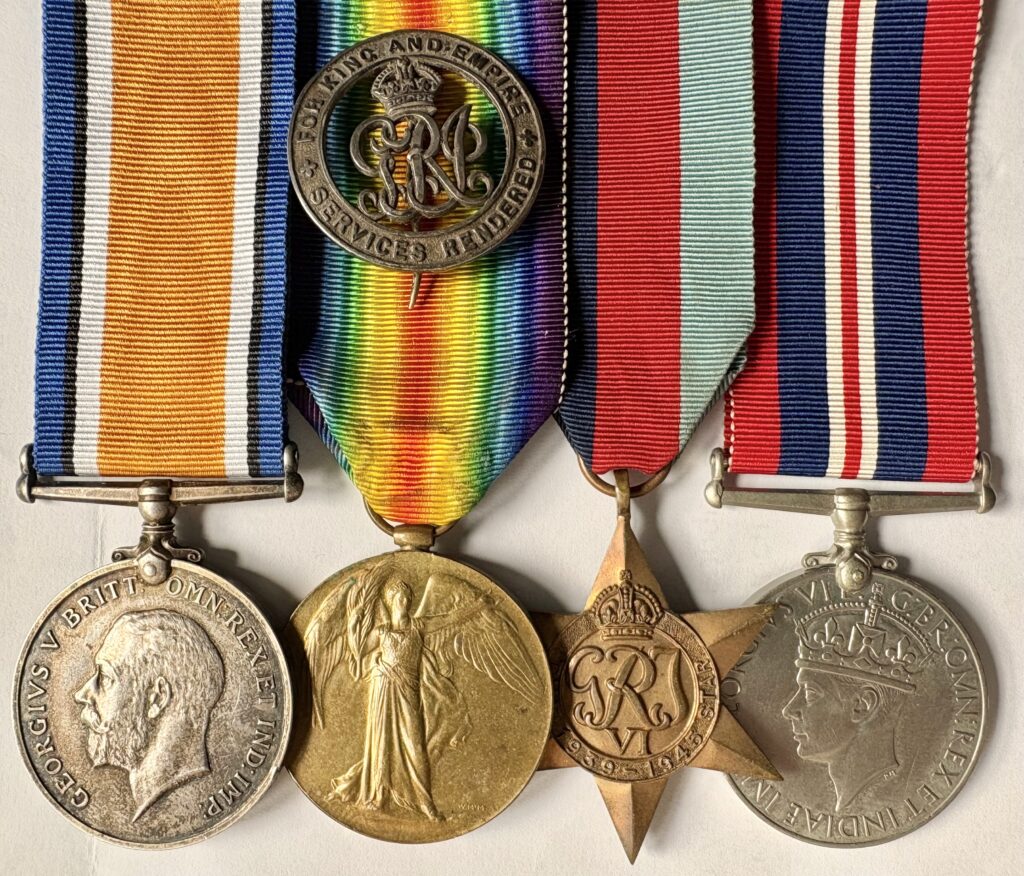
British War and Victory Medals, Silver War Badge, 1939/45 Star and War Medal, the recipient from St Peter Port, Guernsey – served as a Corporal Machine Gun Corps (Cavalry) late Dorset Yeomanry in the Great War and Royal Army Service Corps in the Second World War, taken prisoner of war in France in 1940


British War and Victory Medals


101413 Cpl F G Pulsford MGC


Silver War Badge complete with pin and catch reverse numbered


B.951010


1939/45 Star, War Medal


Unnamed as issued


With details here extracted from online records.


Frank George Pulsford was born in St Peter Port, Guernsey 5th January 1896, the 1911 census records he is 15 years old and residing with his father, mother and siblings at ‘Rhubane’, Rosaire Avenue, St Peter Port, his father George was employed as a Domestic Chauffeur. Before the outbreak of the Great War Frank moved to Dorset and attested for the Dorset Yeomanry (Number 101413) on 7th September 1914, he subsequently transferred to the Machine Gun Corps (Cavalry) (Number 101413). Frank is recorded as wounded in action in War Office Casualty List number 5574 dated 24th May 1918, he also suffered a knee injury from which he was discharged on 25th January 1919 no longer fit for Military service and received a Silver War Badge Number B.95010. Awarded a pension from 26th January 1919 due to his attributed knee injury, his address on the pension card is recorded as ‘Sterling House, Street, Poole, Dorset. The 1921 census records Frank is employed by the Hamworthy Engineering Company as an Engineer and Fitter, his father, mother and sister are now residing with him at 14 Sterte Road, Poole. Frank re-enlisted on the outbreak of the Second World War into the Royal Army Service Corps (Number T/48514) and was sent to France as part of the 1940 BEF. Taken prisoner of war between 10th May and 16th June 1940 TNA WO417/15 refers POW number 12409), he was held at Stalag 357 in Germany. Reported as repatriated following the end of the war with Germany in War Office Casualty List WO417/88. Frank returned to Poole and died there in 1979.


EF £150 SOLD

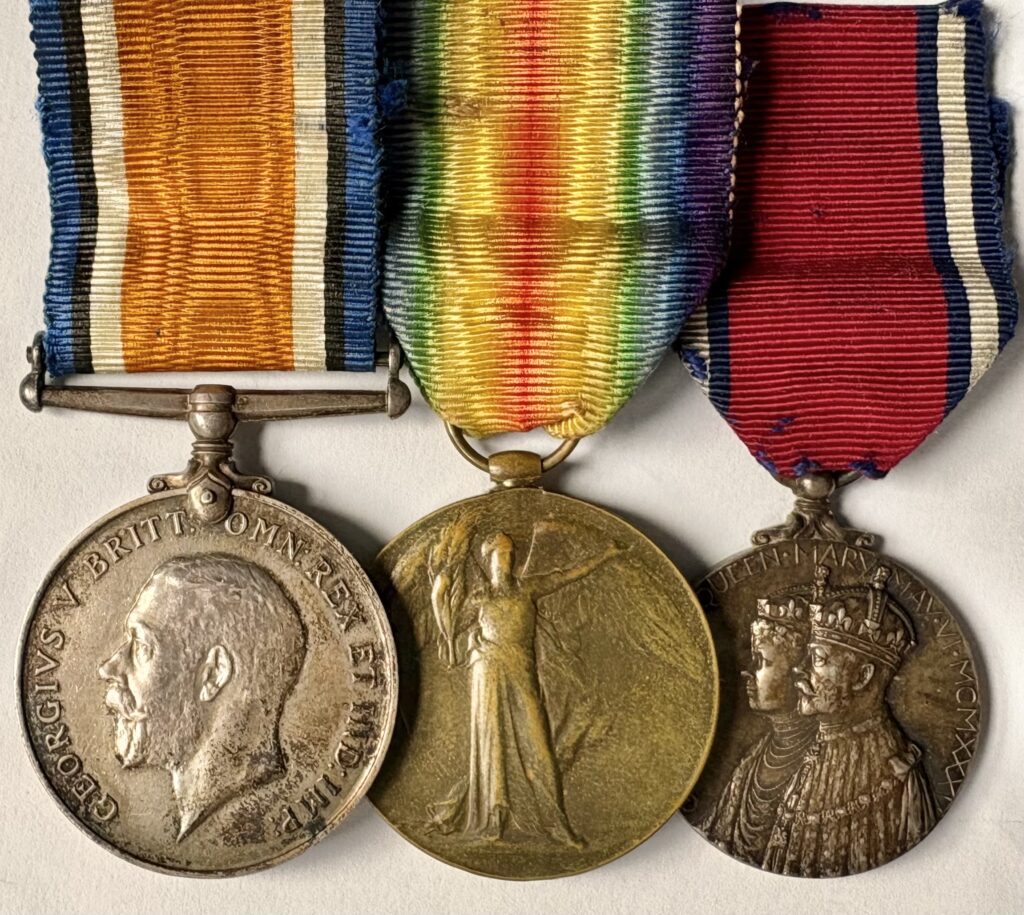
British War and Victory Medals, King George V Silver Jubilee Medal 1935, Sergeant, Machine Gun Corps (Infantry) and Civil Servant, Colonial Office, Nyasaland Protectorate.


British War and Victory Medals


98593 SJT W J Roper MGC


King George V Silver Jubilee Medal 1935


Unnamed as issued


Appears o the King George V Silver Jubilee 1935 Medal roll as Assistant Secretary and Clerk of Executive and Legislative Councils, Nyasaland.


William James Roper was born 11th September 1891 in Pimlico, London, the 1911 census records he is a 19 year old Clerk in the Civil Service residing with hs parents and brother at 41 Earl’s Court Square, Kensington, London. Serving in the Machine Gun Corps (Infantry), his Medal Index Card records he received the British War and Victory Medals only, he was commissioned 2nd Lieutenant Rifle Brigade 26th April 1919 (London Gazette 26th April 1919 page 5285) but relinquished his commission shortly after. He applied for his Medals on 10th March 1922 and these were sent to him c/o The Chief Secretary’s Office, Lomba, Nyasaland Protectorate. William married Elizabeth Mary Pearce on 10th June 1919 at St John the Evangelist Church, Smith Square, Westminster, London, he recorded his occupation as Civil Servant, Colonial Office and address as 34 Causation Street, Westminster. William and his wife appear to have spent the rest of their lives in Africa, they are traced coming back to London on 15th April 1937 aboard the SS Durham Castle and arrived in Southampton on 14th July 1946 aboard the SS Carnarvon Castle – they would be staying during their visit at ‘Falkland’, River Street, Dover, Kent. William’s death is not traced in the UK so I assume the couple retired in South Africa.


EF £95 SOLD